Acheronta movebo. Made in Abyss and the tradition of descent
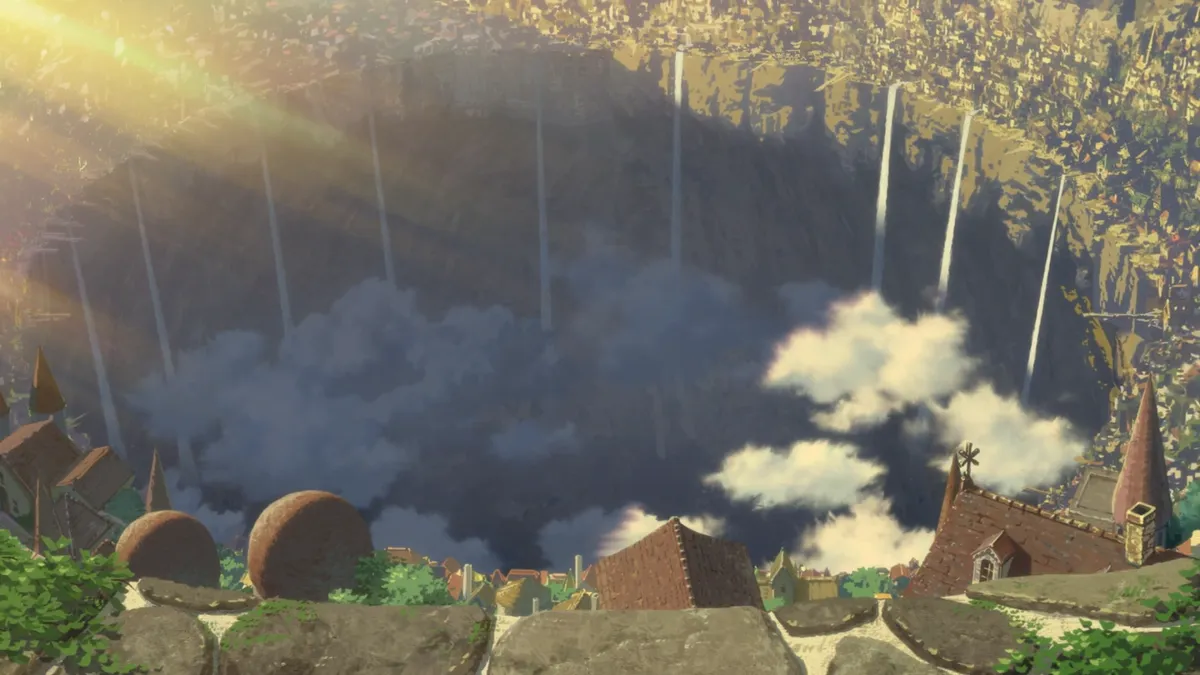
I. In 2017, the studio Kinema Citrus adapted Made in Abyss, Akihito Tsukushi's manga, into an anime. The story follows the descent of a young girl (Riko) and an android (Reg) into the Abyss, a vast, enigmatic place filled with secrets. As each episode unfolds, the series begins to resonate with other images and figures. From Virgil to Freud, from Dante's Inferno to the Underground of Undertale, from Alice to Neo, different forms of the same journey downward. Made in Abyss reimagines, in a singular and striking way, that ancient impulse to descend into the unknown.
At first, the series seems to offer a familiar adventure. A curious girl and a mysterious android venturing into a colossal pit in search of answers. This way, the anime builds a fascinating world, full of biological marvels and archaic mysteries. Yet beneath its soft colors and seemingly innocent characters lies something deeper: a reflection on the very act of descending.
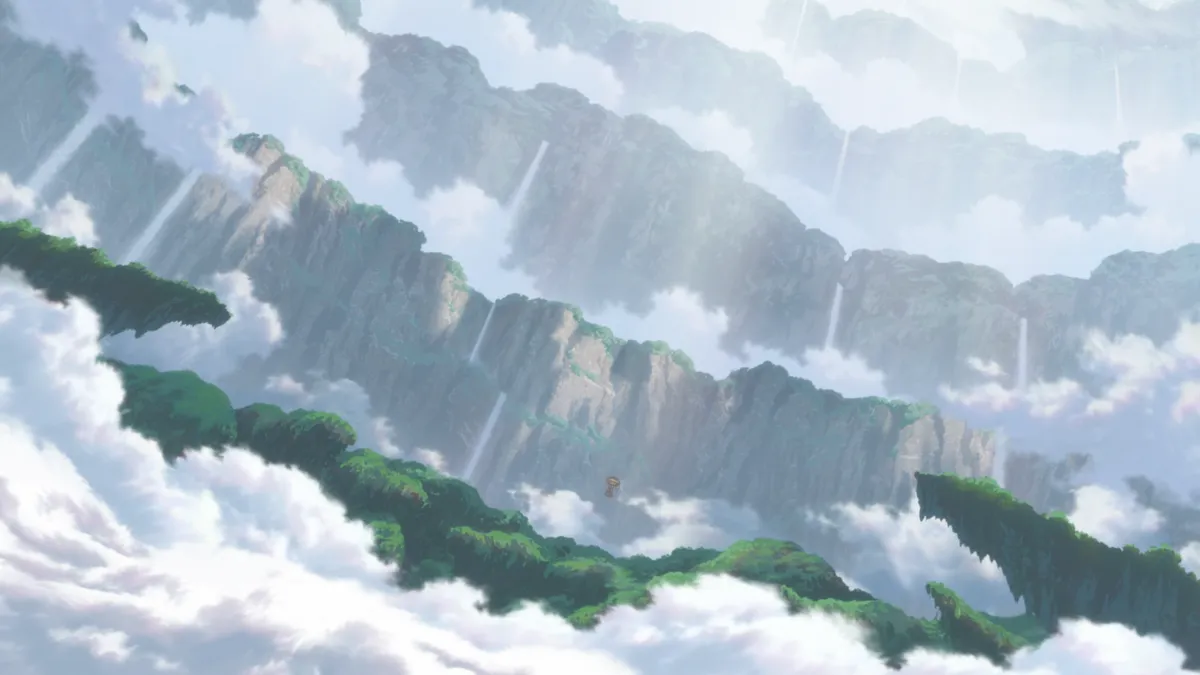
II. Since the dawn of culture, descent has held a central place in our narratives. The figure has a name: katabasis (κατάβασις, from the Greek katá, “downward”; and baínō, “to walk, to go”). It literally means “going down.” But not as a mere literary motif, rather, as a deep structure of human experience. We descend toward our fears, our losses, those regions of ourselves we cannot control. As if every culture, in every age, needed to imagine that journey to the depths.
That descent does not always respond to an external need. Sometimes it arises as desire; a longing to know, to touch what is forbidden. In Made in Abyss, the force that drives Riko and Reg is a dark, almost pulsional attraction, an inverted Icarus. The Abyss seduces.
Orpheus descends to the underworld to reclaim Eurydice; Christ, according to the Apostles' Creed, descends into hell to free the just; Dante, centuries later, undertakes his own journey through the depths of Inferno, seeking understanding and redemption. Even in modern fictions (Alice in Wonderland, Matrix, Undertale) the act of going down into the unknown remains a powerful metaphor. Crossing into a strange, unstable realm where the usual laws no longer apply.
Made in Abyss inscribes itself in this lineage. The Abyss, beyond its materiality, is not merely a physical pit. It is a space of trial and transmutation. Each layer marks a threshold which, once crossed, leaves traces that forever alter one's way of inhabiting the world. And as in the ancient tales, to descend is to risk irreparable loss, unforeseen metamorphosis, with no promise of return. The descent, then, exceeds the literal motion through space; it is an alteration of being, a journey that marks both body and consciousness.
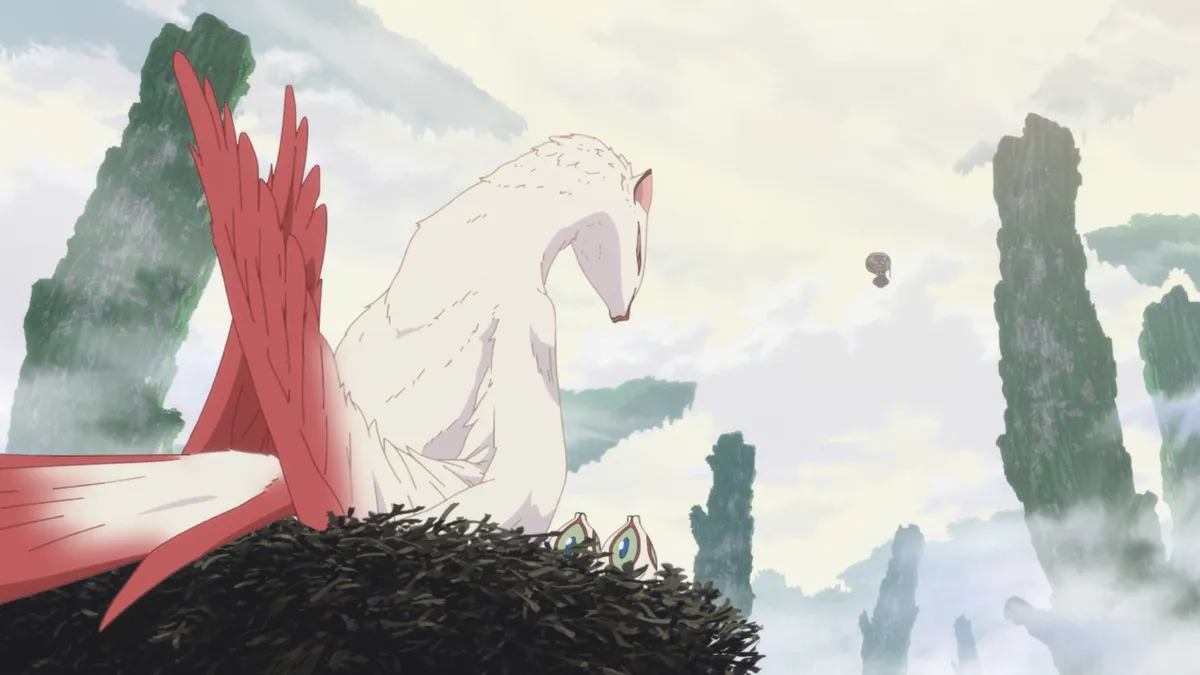
III. From ancient myths to modern elaborations, the motif of katabasis has persisted as a central representation of the encounter with the unknown. Freud, at the beginning of the twentieth century, translated that mythical descent into the language of psychoanalysis. To go down was to enter the unconscious. The exploration of dreams, slips, or symptoms repeats, in another form, the same logic of the journey toward the depths. “If the gods of heaven will not help me,” he writes, quoting Virgil, “I will stir up the gods of the underworld.”1
Katabasis means exposing oneself to the loss of the certainties that once sustained identity. The “curse of the Abyss” (the punishment that tears body and mind when one attempts to ascend) functions in Made in Abyss as a potent metaphor. One cannot simply “return” after having known certain truths. The Abyss transforms those who cross it, through its brutality, but also because it forces them to face what would otherwise remain hidden.
Its mark is inscribed in the flesh. The body becomes the stage of transmutation. Deformation, mutation, laceration. Signs of pain, but also of the dissolution of stable boundaries between the human and the inassimilable. In this sense, the Abyss turns the body into an abject surface.
Made in Abyss shows that to descend is to expose oneself radically; to pain, to suffering, to vulnerability, to the inescapable. The true journey may not lie in reaching a destination, but in apprehending what emerges along the way. The series teaches that descent (however discomforting) is the only path to a deeper understanding of oneself.
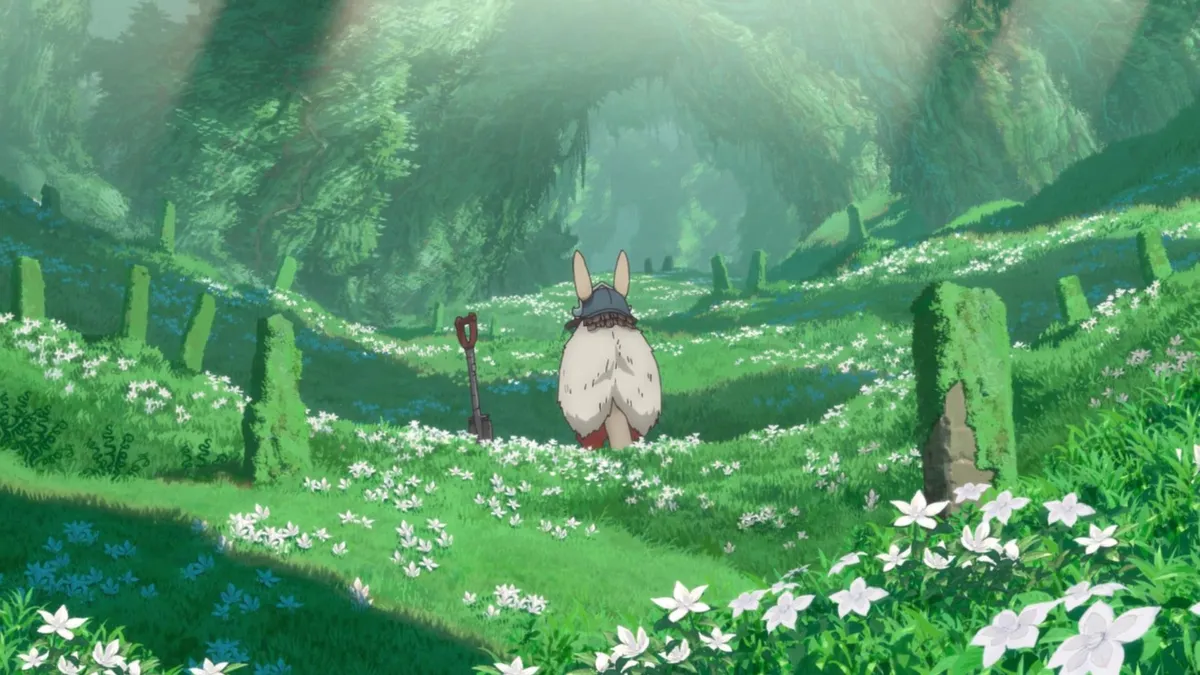
IV. One of the most unsettling aspects of the series is its aesthetics. The world of Made in Abyss is bright, lush, inhabited by adorably designed creatures and fragile, childlike protagonists. At first glance, it promises a tender fable or a coming-of-age adventure. Yet only a few episodes suffice to reveal that beneath this charming surface lies relentless violence.
This contrast intensifies the tragic quality of the work: the beauty of the setting amplifies the cruelty of what occurs. The Abyss distinguishes neither the sublime from the atrocious nor the beautiful from the brutal. Everything coexists indifferently. Its logic is neither moral nor just. Suffering may strike the innocent; death may arrive amid splendor. It is precisely this indifference that renders descent so disturbing. The same contrast appears, for instance, in the myth of Orpheus, whose journey through the underworld (luminous with the hope of recovering his beloved) ends in the shadow of failure and irreversible loss.
The series avoids gratuitous violence or melodramatic tragedy. Each wound, each irreconcilable dilemma marks the characters permanently. There is no comforting “lesson learned.” There is only transformation, sometimes brutal, sometimes barely endurable. The disintegration of childish illusions, of trust in the world, is the price of going down. That process of disintegration is what gives Made in Abyss its power. As in the great tales of katabasis, to descend is also to lose a part of oneself. The fall of one's former identity becomes the nucleus of transformation; the Abyss destroys whatever cannot endure.
In Made in Abyss, descent is not a heroic journey. The beauty of its animation, its enveloping music, and its world-building only reinforce the paradox. The more captivating the Abyss becomes, the deadlier its embrace.
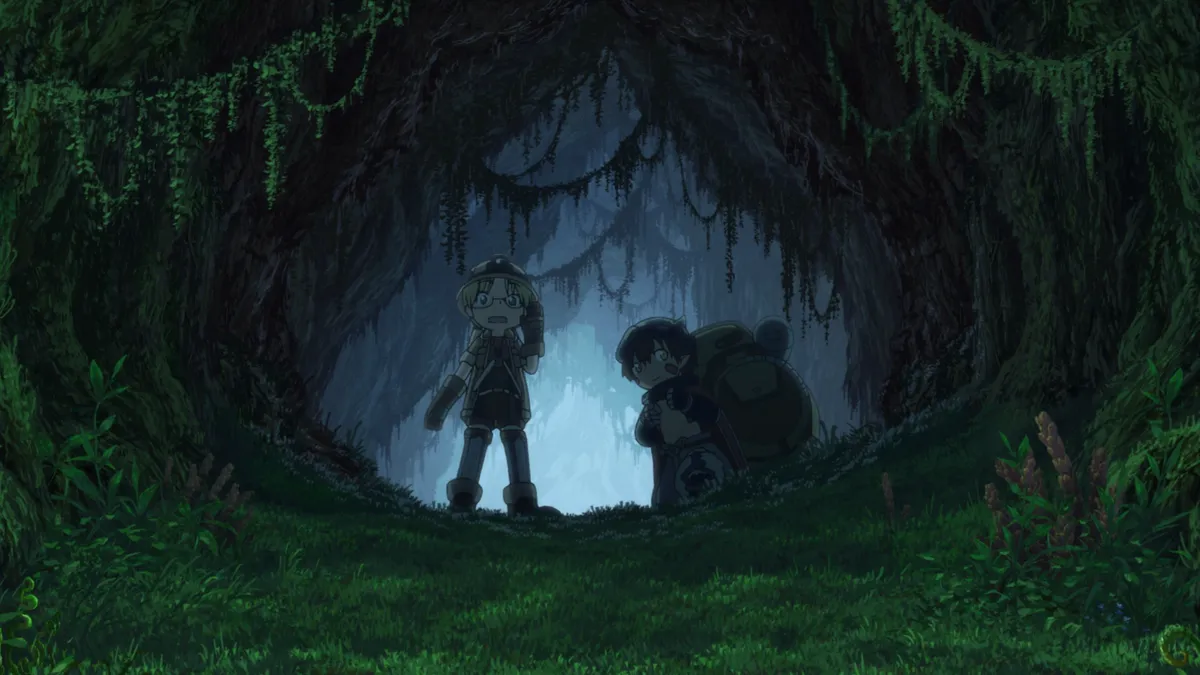
V. In the series, descent transforms not only the body but subjectivity itself. Each layer of the Abyss exposes Riko, Reg, and Nanachi to experiences that can no longer be processed through the categories they carried from above. Physical pain, irreparable loss, and the constant proximity of death are moments of inner rupture. Every new layer is, in some sense, a confrontation with what once hid in shadow.
Descent also distorts the experience of time. In the deepest layers, duration falters; the present stretches. This distortion suspends linearity, it opens a breach into the extracronic. As in the ancient myths, the time of the Abyss is not the time of history, but the time of trauma. Circular, arrested, reverberant.
The journey downward thus becomes a journey into inner otherness. Beyond the literal crossing of a hostile space, katabasis is about surviving oneself. The descent is both geographic and psychic. Each step carves a fissure in identity. The travelers are no longer who they were when they began to descend, yet they do not know what they are becoming either. The same process that Dante endures in the Inferno; to go down is to confront one's own transformation. It is descent as a ritual of painful and uncertain self-discovery.
The wounds of descent do not close; they integrate. Nanachi embodies this truth brutally. Her body and memory are living testimony to irreversible transformation. Reg, too (hybrid, androgynous, caught between flesh and machine) must constantly redefine himself as the Abyss strips away his certainties. The descent never leaves the hero unchanged.
Reg's case introduces a decisive inflection: what happens when the one who descends is not entirely human? His ontological androgyny (neither boy nor machine, neither flesh nor artifice) stretches the classical figure of the descending hero. Made in Abyss suggests that even the technological, if it can suffer and remember, is bound by the same law of descent.
Subjectivity, here and in every katabasis, is a battlefield in constant mutation. Exposed to the limit and deprived of certainties, it enters a state of ongoing destabilization, where survival means perpetual redefinition.
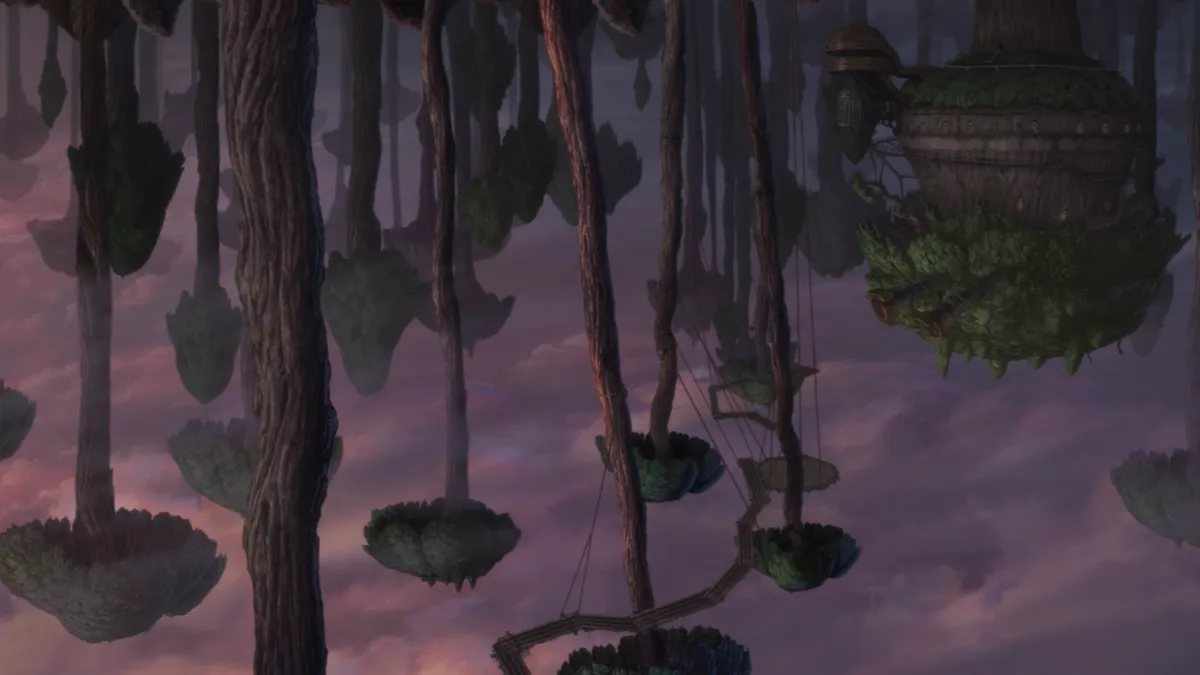
VI. Although the figure of katabasis originates in the oldest mythologies, its persistence in contemporary culture shows that the impulse to descend remains alive. In an era obsessed with ascent (success, self-improvement, resilience) works like Made in Abyss remind us that not every journey aims upward. Sometimes meaning lies below, in confronting what we would rather avoid.
Descent reappears in contemporary narratives in many forms. In video games like Hades, where escaping the underworld is an endless task; in Undertale, where every decision reshapes identity and the sense of the journey; in literary re-readings of myth; in films and series that dwell on loss or mourning. Even in the most intimate layers of modern subjectivity, the idea of “going down” into dark or uncontrollable zones remains a vital necessity.
Made in Abyss fits perfectly within this modern sensibility. It strips the descent of heroism and suspends all promise of comfort. It does not frame pain as an obstacle to be overcome but as an experience that transforms without necessarily healing. There are journeys that do not return to the starting point; as if, in going down, one encounters not only the unknown but a truth that permanently alters self-perception.
In a time when failure and vulnerability are often hidden or denied, Made in Abyss embraces fragility as an inevitable condition of existence. Its Abyss is more than a fantastic setting. It is a mirror of our own falls, of the paths that change us forever. As in the great stories of katabasis, descent is where transformation itself takes place, a mutation not always chosen, yet inseparable from the human experience.
— E.
Flectere si nequeo superos, Acheronta movebo. In The Interpretation of Dreams (1900; in The Standard Edition of the Complete Psychological Works of Sigmund Freud, Vol. V, Hogarth Press, 1962), where Freud cites this verse from The Aeneid, Book VII.↩